
At first glance, a gaiwan looks like a small tea cup with a lid. Pick one up, and you may wonder: Can you sip directly from it? Is the lid only for keeping tea warm? And why brew with it instead of a teapot?
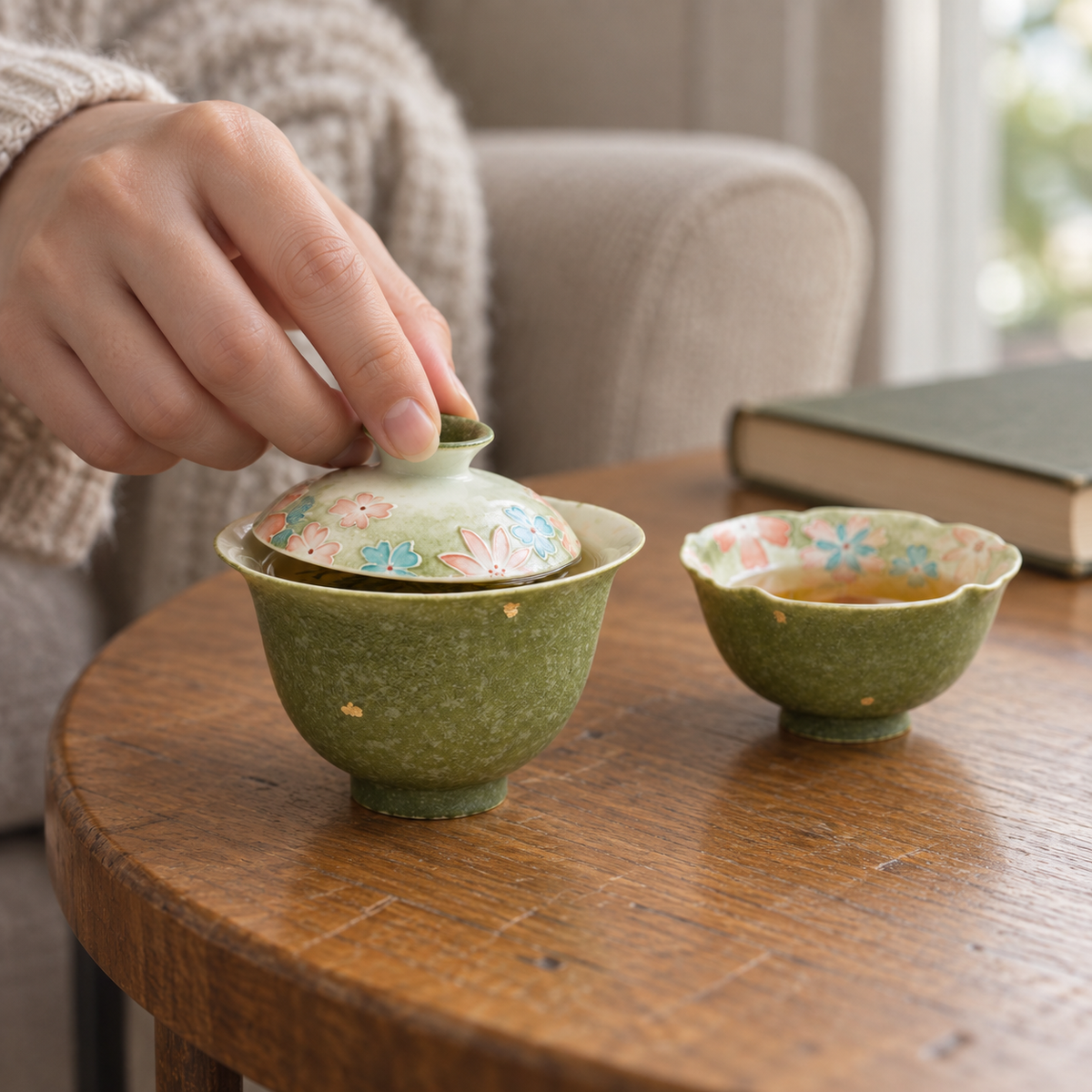
A gaiwan is a Chinese lidded bowl used for brewing loose-leaf tea. Add tea leaves and hot water to the bowl. When the tea is ready, tilt the lid slightly to hold back the leaves as you pour into a cup.
It takes a little practice to pour comfortably, but you do not need to master a formal tea ceremony to enjoy it at home.
01 / Understand the vessel
What does a gaiwan do?
A gaiwan gives tea leaves room to open and steep directly in water. You can lift the lid to watch the leaves unfurl, smell the tea, and decide when to pour.
The lid also works as a simple built-in filter. Leave a narrow gap between lid and bowl as you pour to hold back most leaves. Tiny particles may still pass through, depending on the tea.
Some tea lovers sip directly from a gaiwan, using the lid to move leaves aside. If you have separate tasting cups, you can use the gaiwan for brewing and pour into those cups instead.
02 / Brew with confidence
How to use a gaiwan:
four simple steps
Add loose-leaf tea
Place a small amount of tea in your empty gaiwan. Leaf amounts, water temperatures, and steeping times vary by tea. Start with the instructions for your tea, then adjust after tasting the first infusion.
Add hot water
Pour water into the gaiwan, leaving space below the rim for comfortable handling. Use a temperature suited to the tea you are brewing.
Cover, then tilt the lid
Let the tea steep with the lid on. When you are ready to pour, shift the lid slightly to create a narrow opening along the edge. Tea flows out while the lid holds back larger leaves.
Pour and steep again
Pour into a cup and empty the gaiwan after each infusion. Leftover water can continue steeping the leaves, making the next pour stronger than intended.
Reuse the leaves for another infusion if the tea suits it. The number of enjoyable rounds depends on the tea and your taste.

Practice your grip and pouring angle with cool water first. Do not fill the bowl to the rim. Set it on a heat-safe surface between pours, and stop if it feels too hot to hold comfortably.
03 / Find your own rhythm
Gaiwan or teapot:
which should you use?
Both can brew excellent loose-leaf tea. The main difference is how you prefer to handle the vessel and serve each infusion.
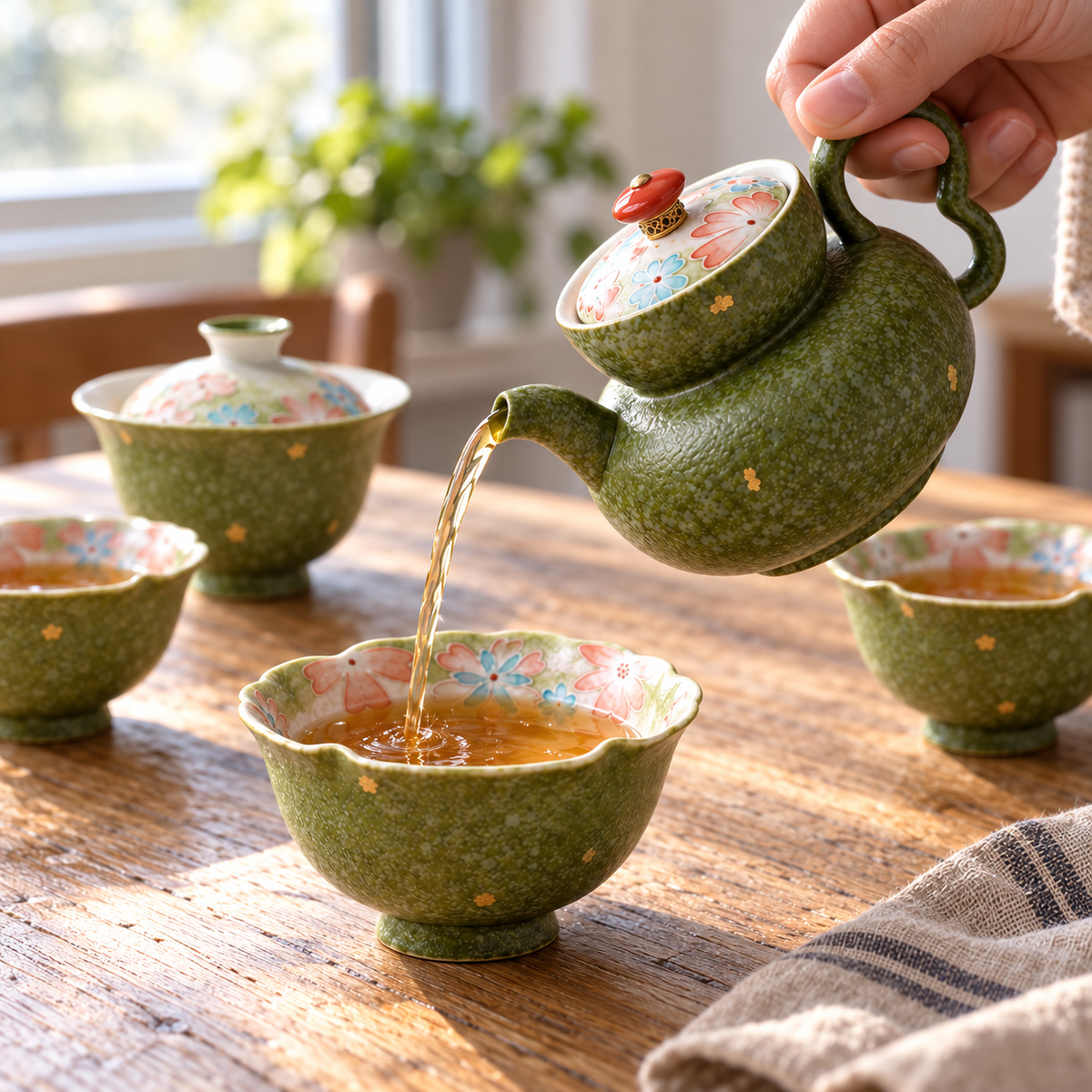
Photos above show actual product imagery. Neither method is automatically better.
04 / A realistic serving size
What does a small gaiwan mean when sharing tea?
A small gaiwan is made for modest pours and multiple infusions. Its capacity does not mean one brew can fill every cup on the table.
One infusion from either brewing vessel cannot fill all five cups completely. Enjoy small pours over several rounds instead.
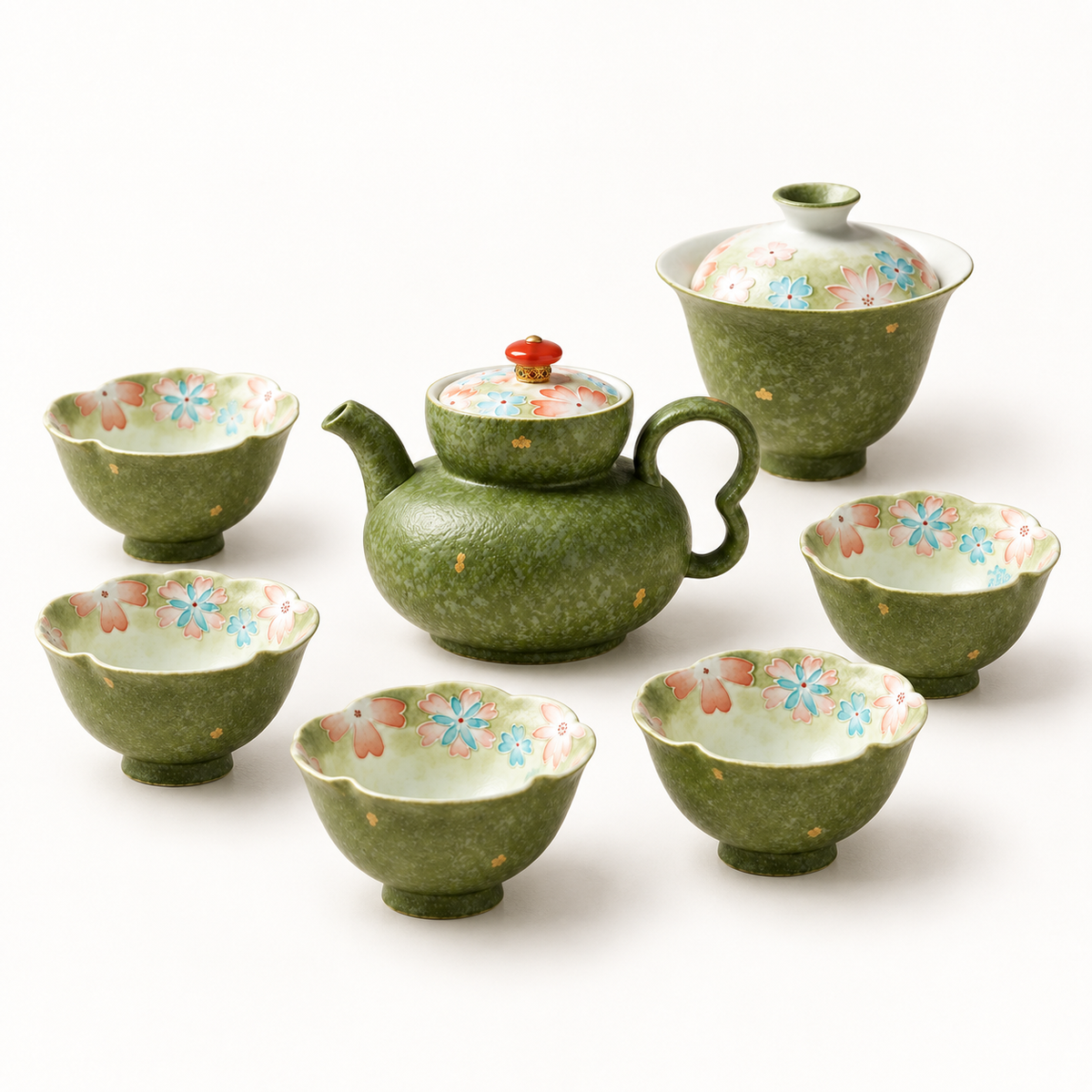
Our Moss Blossom set includes a compact 100 ml gaiwan, a 150 ml teapot, and five handleless cups, each listed at 100 ml. If you already own a separate serving pitcher, you can pour a brew into it before serving. A pitcher is not included in this set.
Moss Blossom
One lidded gaiwan, one compact teapot, and five handleless cups. Two ways to brew; many small moments to share.
Explore the seven-piece set ↗05 / Make it yours
Do you need a gaiwan to enjoy Chinese tea?
No. A gaiwan is one way to brew and explore loose-leaf tea; it is not a requirement.
If you are curious about the lidded bowl, keep it simple: add tea, follow its brewing directions, tilt the lid, and pour carefully. Practice with cool water until the motion feels more comfortable.
And if you prefer a teapot, use the teapot. The best tea ritual is one you will enjoy repeating.
Keep reading: How to choose a ceramic teapot ↗06 / Quick answers
Frequently asked questions
Can I drink directly from a gaiwan?
Yes. Some people sip straight from the gaiwan, using the lid to move leaves aside. You can also brew in it and pour into a separate cup. Take care when the bowl contains hot tea.
Is a gaiwan hard for beginners?
The lid and pouring motion may feel unfamiliar at first. Practice with cool water, leave space below the rim, and take care when handling hot ceramic.
Is a gaiwan better than a teapot?
Neither is better for everyone. A gaiwan gives you easy access to the leaves and uses its lid when pouring. A teapot offers a handle and spout. Choose the method that fits the way you like to make tea.
Good tea asks for your attention,
not your expertise.