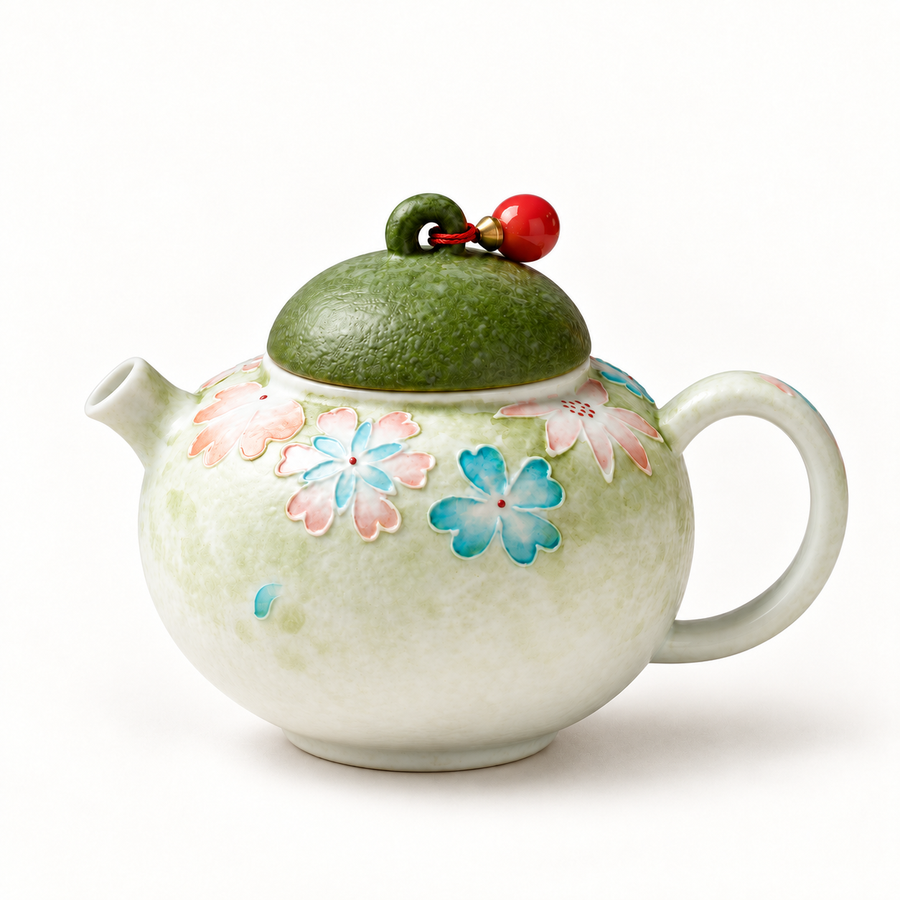
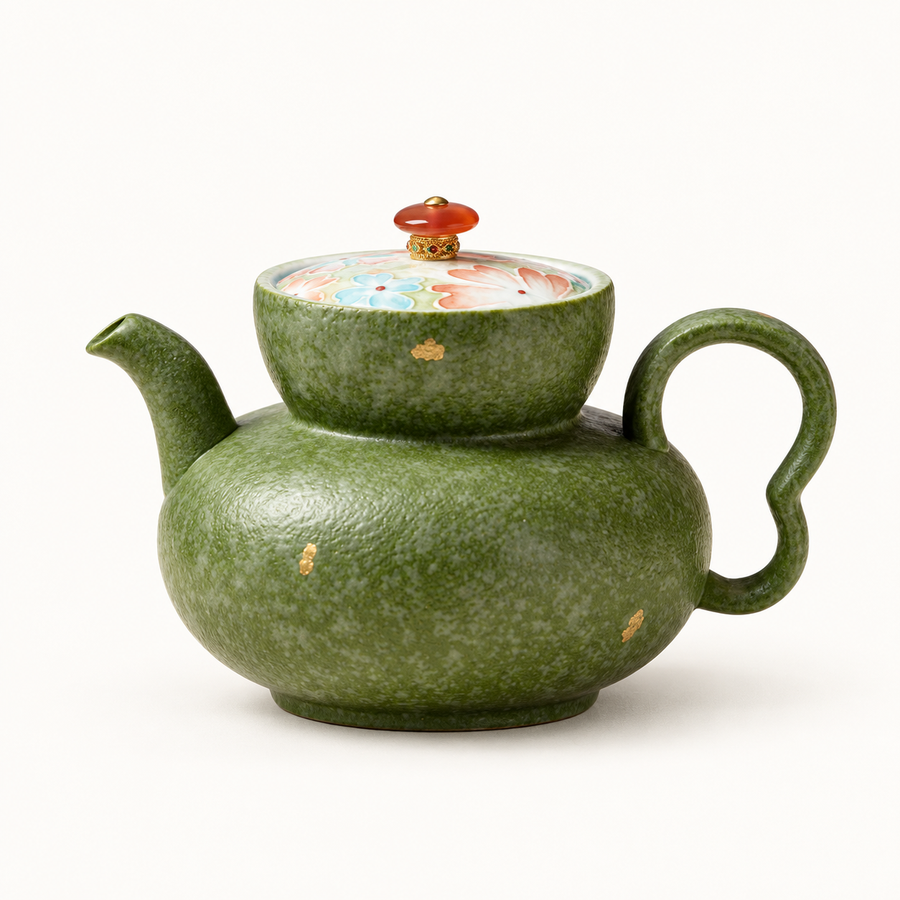
A beautiful teapot may catch your attention through color or decoration. The teapot you continue using, however, is usually the one that fits the way you actually make tea.
Its capacity suits the number of people at the table. The handle feels balanced when the pot is full. The lid sits securely enough for a calm pour. The spout gives the water somewhere clear to go. Its surface also belongs in your home rather than asking to be kept out of reach.
Choosing well is less about finding one universally “best” teapot and more about finding the right relationship between size, form, pouring, material, finish, and everyday use.
What should you look for when choosing a ceramic teapot?
Start with how much tea you normally brew and how many people you serve. Then compare the listed capacity, overall dimensions, body shape, handle, spout, lid, material, finish, and care instructions. Product photographs should show the pot from several angles and explain what is included.
Picture an Ordinary Tea Moment
Do you usually brew one small pot and drink it immediately? Do you refill several small cups during a conversation? Do you want enough tea for a large mug beside your desk, or are you choosing a pot for guests?
A compact teapot encourages smaller, freshly brewed servings and repeat infusions. A larger pot reduces the need for refilling when several people are gathered, but it also becomes heavier when full. Neither approach is automatically better. The useful choice is the one that matches your normal pace.
Whole leaves also need room to open. If the pot includes an infuser or built-in strainer, check its construction rather than assuming a generous exterior always means generous brewing space.
Choose a Capacity You Will Actually Use
Do not rely on photographs alone. A rounded 160 ml teapot can appear large in a close product image, while a tall narrow pot may hold less than expected. Read both the capacity and the physical dimensions.
A practical method is to measure the listed volume with water and pour it into your favorite cup. You will immediately understand whether the pot suits one serving, several small pours, or a shared table.
Remember that a teapot is rarely filled to the absolute rim. Tea leaves, an infuser, and comfortable pouring space reduce the practical volume slightly.
The Body Is More Than a Silhouette
Low and rounded forms
A low, rounded body can feel grounded and intimate. Its wider interior may give larger leaves more horizontal room to unfold, depending on the internal construction. This shape also creates a broad surface for expressive glazes and raised decoration.
Taller forms
A taller teapot occupies less horizontal space and may suit a narrow tray. Because its weight sits differently, the relationship between the handle and body becomes especially important.
Wide openings
A generous opening can make it easier to add leaves and clean the interior. A smaller opening creates a more continuous silhouette but may require more careful rinsing. No shape guarantees a better cup on its own: body, opening, lid, spout, and handle should make sense together.
Spout, Handle, and Lid Decide How the Pot Behaves
No photograph can prove that a teapot pours perfectly. A trustworthy product page should avoid unsupported promises and provide enough side views, dimensions, and construction details for an informed decision.
Decorative lids may include sculpted, painted, metallic, wooden, or mixed-material details. These features add character, but they may also change the recommended cleaning method or make microwave use inappropriate.
“Ceramic” Is a Family, Not One Material
One material is not automatically superior. Clear information about the specific piece is more useful than broad claims about an entire ceramic category.
Choose a Finish You Can Live With
The finish changes how a teapot catches light, feels in the hand, ages visually, and fits with the rest of the table. It may be quiet and uniform, deliberately varied, or highly decorative.

No Single Surface Is Automatically Better
Choose according to the atmosphere you want, the variation you are comfortable receiving, and the amount of handling and cleaning the piece will experience.

A Teapot Is Not Automatically a Kettle
Follow the care instructions for the individual piece. Avoid abrupt temperature changes, wash gently when hand washing is recommended, and avoid abrasive pads on painted, metallic, raised, or expressive glaze surfaces.
Do not assume microwave or dishwasher compatibility from the word “ceramic.” Decorative lids, metallic accents, wood, and mixed materials can change what is appropriate.
A Practical Online Buying Checklist
Common Questions About Choosing a Ceramic Teapot
Direct answers about capacity, heat, weight, handmade variation, and online selection.
What size teapot is best for one person?
A teapot around 150–250 ml can suit one person who enjoys smaller servings or repeat infusions. The best capacity depends on the size of your cup and whether you prefer one generous pour or several smaller ones.
Is a small teapot better than a large teapot?
Not universally. A small teapot gives you more control over short, repeat infusions and is easier to finish while the tea is fresh. A larger teapot is more convenient when serving several people or filling larger cups.
Should a ceramic teapot be glazed inside?
Many functional ceramic teapots are glazed inside because a smooth surface is generally easier to rinse and does not absorb flavors in the same way as some unglazed clay bodies. Check the material, finish, and intended use of the specific pot.
Can a ceramic teapot go on the stove?
Do not assume it can. Most ceramic serving teapots are not stovetop kettles. Use a separate kettle to heat water unless the manufacturer explicitly states that the teapot is designed for direct heat.
Does a heavier teapot mean better quality?
No. Weight alone does not establish quality. Material, wall thickness, capacity, handle position, balance, finishing, and intended use need to work together.
Are handmade variations defects?
Subtle differences in glaze flow, color depth, brushwork, texture, or decorative placement can be natural. Structural cracks, sharp edges, an unstable base, or damage are different and should not be dismissed as handmade variation.
How do I know whether a teapot will pour well?
Online, look for clear side views of the spout, handle, lid, and body, plus accurate dimensions and construction details. Verified customer reviews can help when available. No photograph alone can guarantee pouring performance.
Two Compact Teapots for Personal Tea Moments
Both pieces are designed for smaller servings rather than large-group hosting, with hand-finished surfaces that vary subtly from one firing to the next.