
THE TAILYMORA JOURNAL · A PRACTICAL GUIDE
Tea Cup vs Coffee Cup:
What’s the Difference?
A cup listed for tea may be just right for your morning coffee. A coffee cup and saucer may work equally well for afternoon tea. So, what is the difference between a tea cup and a coffee cup?


Illustrative drink scenes. Props are not included.
The names often describe a serving style rather than an exclusive use. Many cups intended for hot drinks can hold either beverage. What matters is whether the capacity, shape, grip, and care requirements suit the way you drink.
Research on specialty coffee suggests that cup shape can influence perceived aroma and flavor. It is one factor to consider alongside capacity, grip, and personal preference.
If you enjoy both tea and coffee, you may find one cup that fits both routines.
01
Tea Cup vs Coffee Cup at a Glance
Tea cups and coffee cups come in many forms. A small gongfu-style cup is used for tasting tea over several short infusions. It serves a different purpose from a traditional teacup and saucer or a large tea mug. Coffee drinkware ranges from compact espresso cups to generous mugs.
Use these comparisons as shopping guidance, rather than fixed definitions.
| Feature | Tea cups | Coffee cups | What to check |
|---|---|---|---|
| Capacity | Small tasting pours or larger servings of tea | Short espresso, brewed coffee, or drinks with milk | The volume of your finished drink, with room below the rim |
| Shape | Shallow cups, deeper cups, and mugs | Compact espresso cups, wider cups, and taller mugs | Whether the opening and proportions suit your use |
| Handle | Some have a handle; others do not | Handles are common, but handleless designs also exist | A comfortable, secure grip |
| Saucer | Used in some tea settings | Used with espresso and other coffee services | What is included and how the cup rests on it |
| Material and finish | Vary by product | Vary by product | The maker’s stated use and care instructions |
Swipe across the table to compare.
A handle or saucer does not make a cup exclusive to one drink. The individual piece tells you more than its category name.
02
Can Tea Cups Be Used for Coffee?
Yes. A tea cup intended for hot beverages can often be used for coffee, provided your serving fits and you can hold it comfortably.
The most common limitation is size. A small tasting cup may accommodate a short espresso, but it will not hold a full mug of brewed coffee. Adding milk or water increases the space you need.
Before choosing a tea cup for coffee, compare three things:
- Your finished serving: Include the coffee, milk, water, and foam you normally add.
- Room below the rim: Allow enough space to lift and sip without spilling.
- How you will hold it: Consider the handle or body grip when the cup contains a hot drink.
For example, a 60 mL cup and a 300 mL cup can both hold coffee, but they suit very different portions. Buying by the photograph alone can leave you with a beautiful cup that is too small for your usual drink.
03
Can You Use a Coffee Mug for Tea?
Yes. A coffee mug intended for hot drinks can also serve tea.
You can pour brewed tea into it, use a tea bag, or add a compatible infuser for loose leaves. Check that the infuser fits the opening and leaves room for the leaves to expand.
This is also an established option in tea brewing. In its guide to brewing Puer tea, white2tea includes a standard coffee mug among the vessels suitable for its “grandpa style” method.
If you use the same cup for both drinks, wash it thoroughly between uses. Follow the product’s care instructions, particularly where a piece has a special finish or a handle made from another material.
Some porous unglazed clay vessels can retain aromas over time. These may call for a different approach from glazed everyday drinkware; check the maker’s recommendations before switching between tea and coffee.
04
Cup Size Matters More Than the Name
Think about the amount you actually pour. A small tea serving and a short coffee might fit the same cup. A large latte and a full mug of tea require more room.
For capacity comparisons, use US fluid ounces, which measure volume. NIST’s conversion table gives one US fluid ounce as approximately 29.57 mL.
These TailyMora pieces show how differently sized ceramic cups can fit different drinks:
| Cup | Listed capacity | A tea use to consider | A coffee use to consider |
|---|---|---|---|
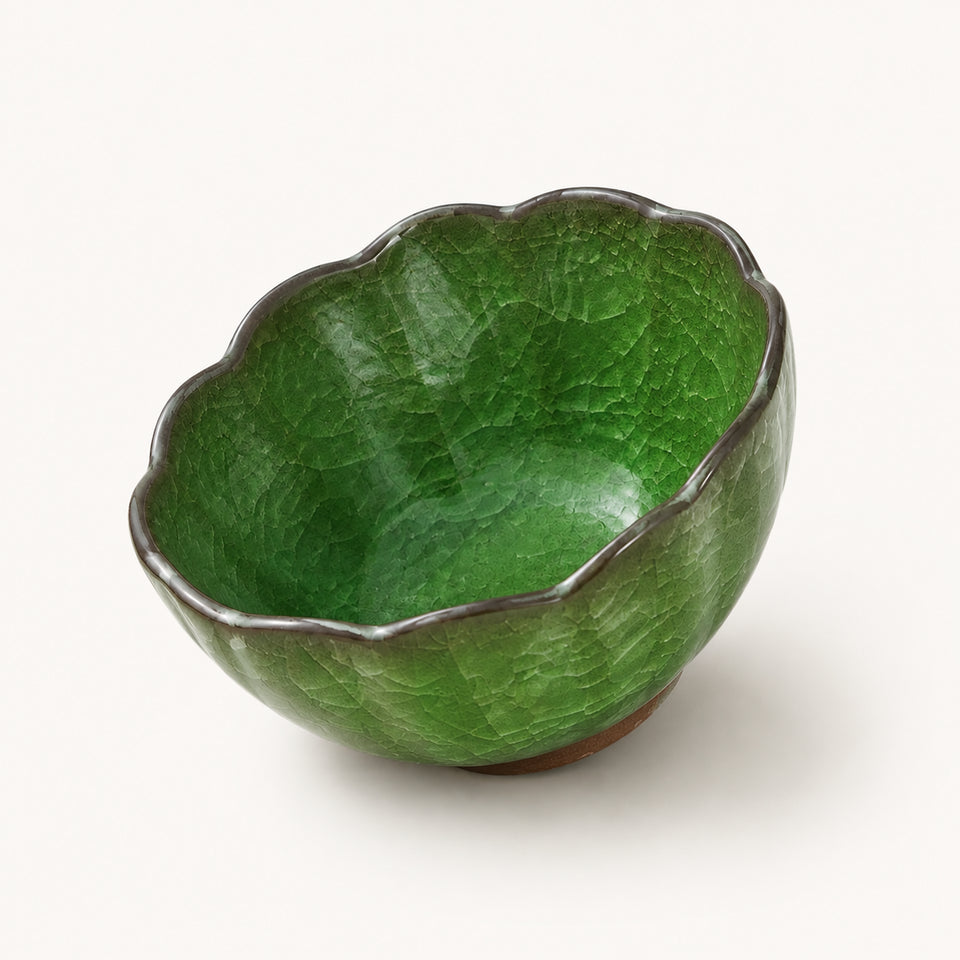
| Jade Bloom | Approx. 60 mL / 2.0 US fl oz | Small tasting pours | A short espresso that leaves room below the rim |
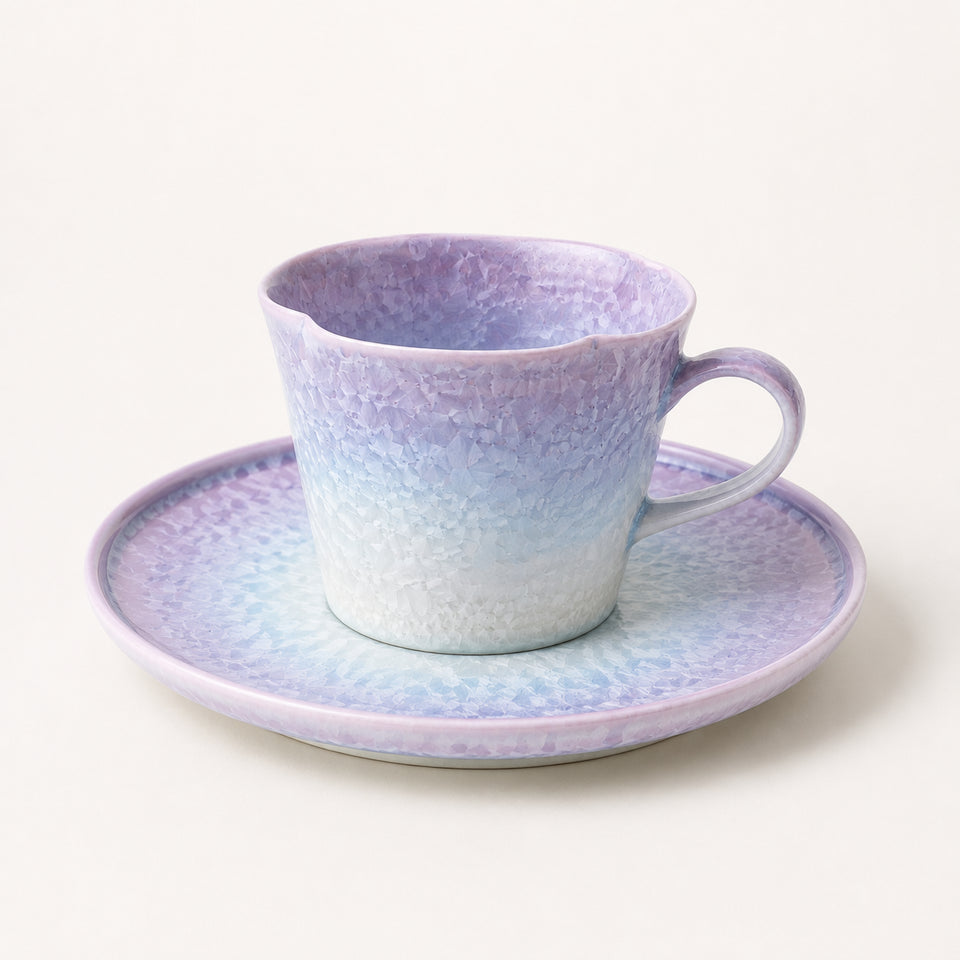
| Lavender Mist | Approx. 140 mL / 4.7 US fl oz | A modest serving of brewed tea | A small coffee, allowing for any additions |
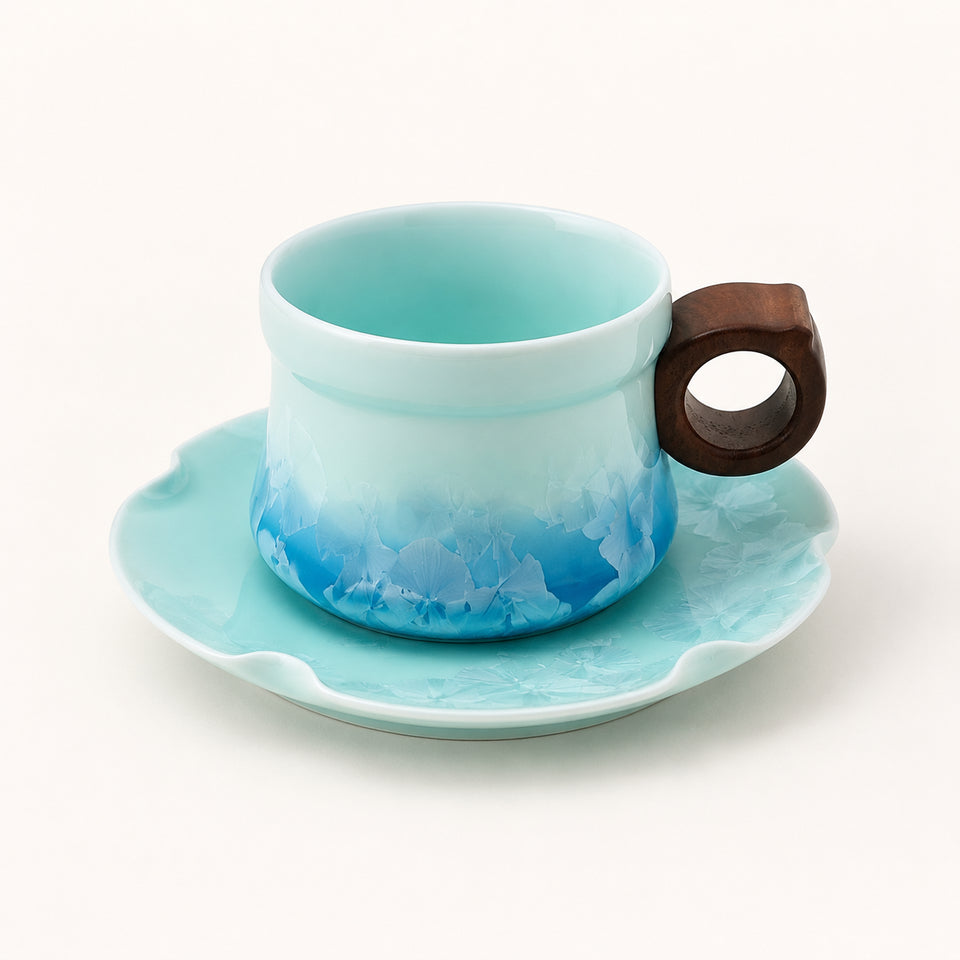
| Blue Lagoon | 300 mL / 10.1 US fl oz | A larger serving of tea | Brewed coffee or a milk-based drink, if the finished serving fits |
Swipe across the table to compare.
These are product examples, not standard sizes for every tea or coffee cup. Listed capacity also does not necessarily describe a comfortable drinking fill.
If you are unsure what size you need, measure your usual serving with a measuring jug. Compare it with the new cup’s listed capacity and check how the seller measures it.
For drink-by-drink guidance, see our coffee cup size guide for espresso, cappuccino, and latte.
05
Handles, Rims, and Saucers: What Will Feel Comfortable?
Choose a grip that suits you
A handle can be useful when you carry a hot drink from the kitchen to your desk. Check the opening, position, and overall width, rather than judging it only by its appearance.
A handleless cup offers a different way to hold the piece. Its walls can become hot, so let the drink cool until both the cup and beverage are comfortable to handle and sip. A small cup is not automatically cool to the touch.
Look closely at the rim
The rim is the part you drink from. Look at its thickness, curve, and shape, including any scalloped or irregular edges.
There is no single rim design that everyone will prefer. Close-up photographs and clear dimensions help you judge whether a piece fits your habits.
Consider how you use a saucer
A saucer gives the cup a place to rest and may provide space for a teaspoon, depending on the design.
It can work with tea or coffee. Check how the cup sits on it, the saucer’s dimensions, and whether both pieces are included.
06
How to Choose a Ceramic Cup for Both Tea and Coffee
Start with your everyday drinks, then compare the pieces you like.
- Measure your usual serving. Include milk or added water, and allow room below the rim.
- Check the intended use. Choose drinkware the maker identifies as suitable for the beverages you plan to serve.
- Compare the grip and proportions. Capacity tells you how much a cup holds; height, diameter, and handle dimensions help explain its physical size.
- Read the care instructions. A ceramic body alone does not establish whether the complete piece is suitable for a microwave or dishwasher.
- Choose a finish you enjoy using. Look at the interior, rim, and exterior, as well as the styled photograph.
For a cup shared between morning coffee and afternoon tea, the best choice is one that accommodates both servings and feels comfortable in daily use.
07
Frequently Asked Questions
Is a tea cup always smaller than a coffee cup?
No. Small tea tasting cups exist alongside large tea mugs. Coffee cups also range from small espresso cups to larger mugs. Compare the stated capacity.
Can you drink espresso from a tea cup?
Yes, if the cup is intended for hot drinks and holds your espresso with room below the rim. Check your machine’s output or your usual serving before choosing.
Do tea cups need handles?
No. Both handled and handleless tea cups are used. Choose a design you can hold comfortably, and allow a hot cup to cool before picking it up.
Can a cup and saucer be used for both tea and coffee?
Yes, when the cup’s intended use and capacity suit both drinks. A matching saucer does not restrict the cup to one beverage.
Do you need separate cups for tea and coffee?
You may prefer separate cups because your serving sizes or routines differ. If the same cup suits both drinks and is cleaned between uses, its category name alone is no reason to keep them separate.
08
Find a Cup for Your Everyday Drinks
Explore TailyMora’s ceramic tea cups and coffee cups and mugs. Compare capacity, rim shape, grip, and care instructions to find a cup that suits your morning coffee, afternoon tea, or both.