

The TailyMora Journal · Everyday culture
Home Café Ideas: A Slow Morning with Jingdezhen Ceramics
Coffee first. Inbox later.
Some mornings, your little treat is simply getting to drink your coffee while it is still hot. You put it in a favorite cup, find a place by the window, and leave your phone alone for the first few sips.
If that is your version of “romanticize your morning,” a small home café is a good place to start. A corner of the kitchen can hold your usual brew and something worth looking at while you drink it.
These home café ideas bring Jingdezhen ceramics into the picture, along with a little of the history and craft behind the cup.
What Is a Home Café?
A home café is a space for making and enjoying café-style drinks at home. It might be a dedicated coffee station or a tray beside the coffee maker you already use.
If you are wondering how to create a home café, start with three things: your preferred brewing method, a cup that fits your drink, and enough clear space to prepare it comfortably. Add other pieces as you discover what you actually use.

Coffee Corner Ideas for Small Spaces
Work with one section of your counter, then arrange it around your morning routine.
- Keep the daily tools together. Put your brewer, coffee, and measuring scoop within easy reach. Store occasional extras elsewhere.
- Give the cup a place. A small tray can hold a cup and saucer beside the brewer. Leave room to pour and wipe up afterward.
- Repeat one color. Pick up a color from the glaze in a napkin or a small print nearby. Try wood or a plain cloth underneath a richly colored cup so its surface is easy to see.
Before adding another accessory, make a coffee there. You will quickly notice what helps and what gets in the way.
Why Bring Jingdezhen Ceramics Into Your Coffee Corner?
Jingdezhen is a city in China’s Jiangxi province with a long history of porcelain production. Its ceramics traveled overseas and became part of homes far from the kilns where they were made.[1][2]
That exchange also influenced the objects themselves. The Victoria and Albert Museum documents Chinese export wares that combined Chinese decoration with European shapes or patterns. One Jingdezhen example, made around 1680–1700, is a ceramic vessel modeled on a glass bottle designed to hold oil and vinegar separately.[2]
It is a wonderfully practical detail: a ceramic tradition responding to how someone, somewhere else, wanted to use an object.
Today, you can approach a Jingdezhen coffee cup with that same interest in use. Notice its handle, the curve of its rim, and how it sits on the saucer. Then pour the coffee you make every day.
For more background, explore our guide to Jingdezhen porcelain.
Look Closely: Painted Decoration or Patterns Formed in the Glaze?
Here is one small piece of ceramic knowledge to take into your morning.

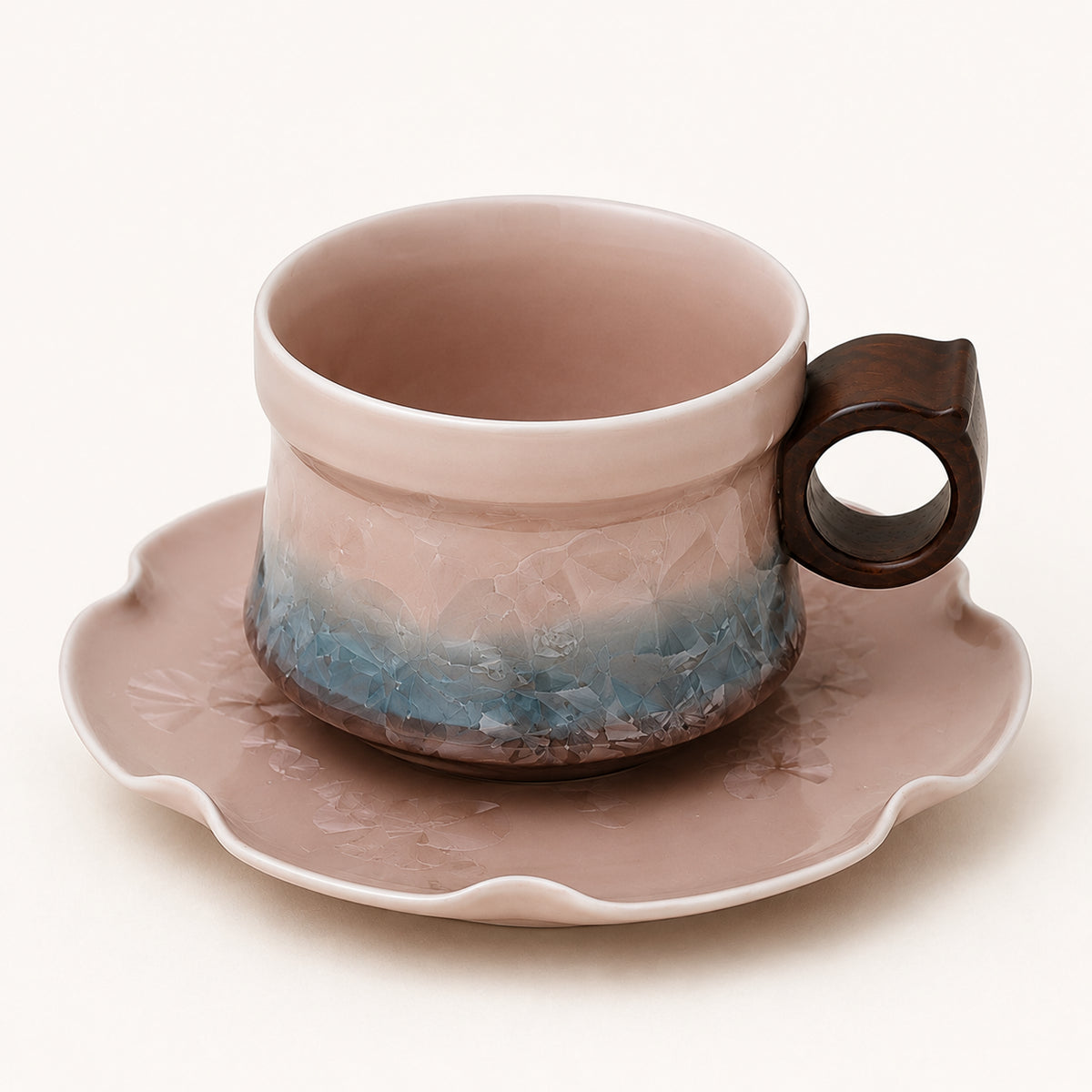
Traditional blue-and-white porcelain usually gets its decoration from cobalt pigment applied beneath the glaze, often with a brush.[2] Crystalline glaze works differently: its visible crystal patterns develop within the glaze during the firing and cooling process.[3]
Look at a crystalline surface and you may see formations resembling flowers or frost. Their arrangement can vary between pieces. Knowing how they form gives you something to notice beyond the color.
Jingdezhen names the place; blue-and-white and crystalline glaze describe different approaches to the surface. A contemporary cup gives you a way to explore that distinction at your own kitchen table.
Blue-and-white image is an illustration; crystalline detail shows Opal Dawn.
Choose a Ceramic Coffee Cup and Saucer for Your Actual Drink
Begin with the amount you usually pour. A small espresso and a milk-heavy morning coffee need different amounts of space. Check the listed capacity and dimensions, and leave some room below the rim.
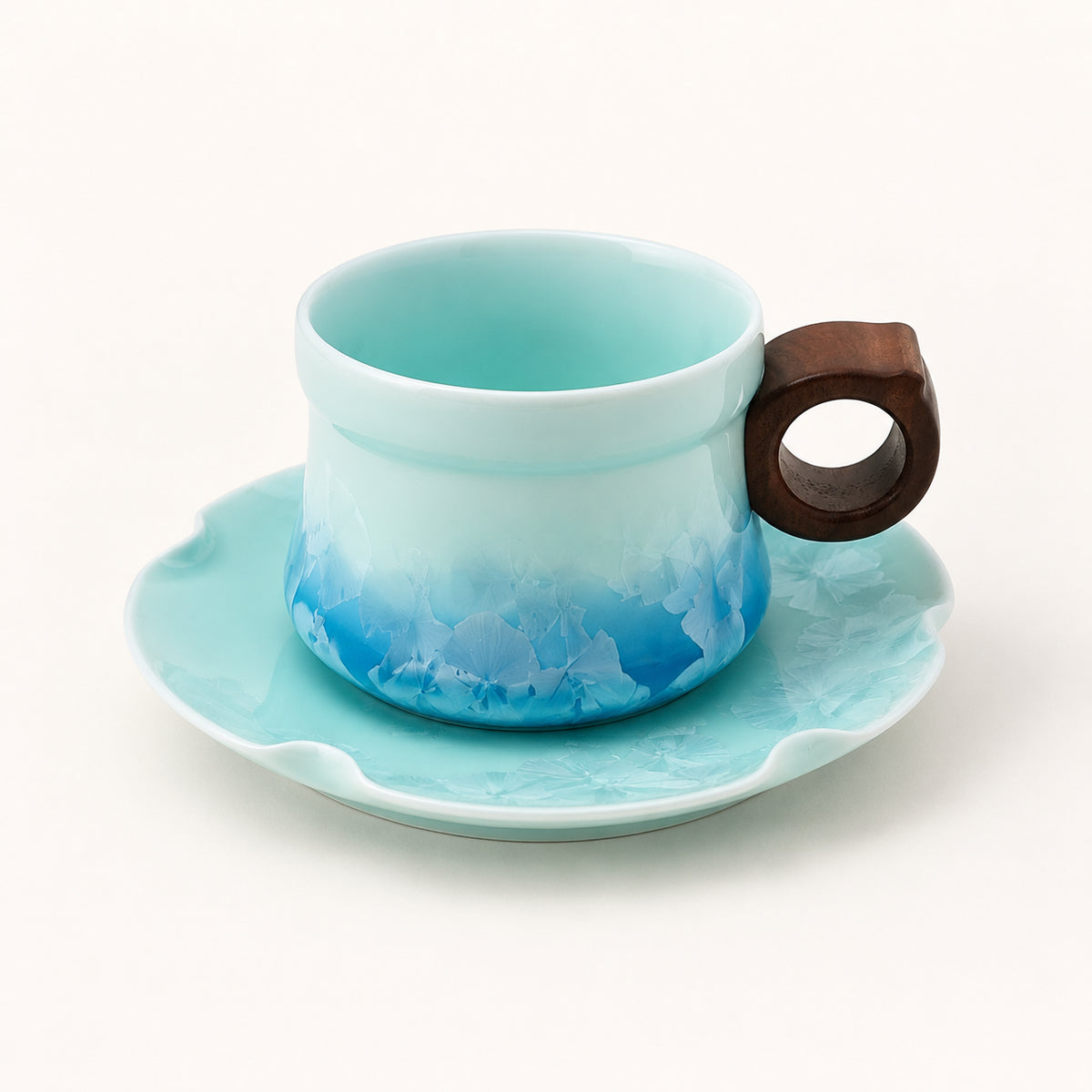
Blue Lagoon
For example, TailyMora’s Blue Lagoon ceramic coffee cup and saucer has a listed capacity of 300 ml, or about 10.1 US fl oz. Made in Jingdezhen, it pairs a turquoise-and-blue crystalline glaze with a flower-edge saucer. Crystal placement and color transitions vary during firing.[4]
Check the care routine, too. Blue Lagoon calls for gentle hand washing. Choose a piece whose upkeep fits the way you use your kitchen.
Our coffee cup size guide can help you compare capacities.
Meet Blue LagoonMake It Your House Special
Choose one drink you look forward to making. That can be your house special, whether it is a weekend latte or the drip coffee you have perfected through repetition.
When a friend comes over, set out two cups and something small to share. A cookie on a plate, coffee poured at the table, a conversation that lasts past the first cup: your home café has something a saved photo cannot show.
On a busy weekday, keep it simpler. Pull out the cup you like, pour your usual coffee, and enjoy those first few sips before opening your inbox.

Frequently Asked Questions
Do you need an espresso machine for a home café?
No. A drip coffee maker, French press, or pour-over setup can be the starting point. Build your coffee corner around the drinks you already enjoy making.
Can Jingdezhen ceramics be used for coffee?
Yes. Contemporary Jingdezhen ceramics include coffee cups and saucers. Check the individual product’s intended use, capacity, and care instructions when choosing one.
Are crystalline glaze patterns hand-painted?
The crystal formations develop inside the glaze during firing and cooling. They are different from decoration painted onto a ceramic surface.[3]
Sources and Further Reading
- UNESCO — Jingdezhen, Creative Cities Network, for the city’s porcelain heritage and international cultural exchange.
- Victoria and Albert Museum — Chinese blue-and-white ceramics, for cobalt decoration, overseas trade, and examples of forms adapted for export.
- TailyMora Journal — What Is Crystalline Glaze?, for the distinction between painted decoration and crystal formation in glaze.
- TailyMora — Blue Lagoon, for the product’s origin, capacity, finish, variation, and care instructions.
Lifestyle scenes and the blue-and-white detail are AI-created editorial illustrations. Product specifications and care information are listed on the individual product pages.